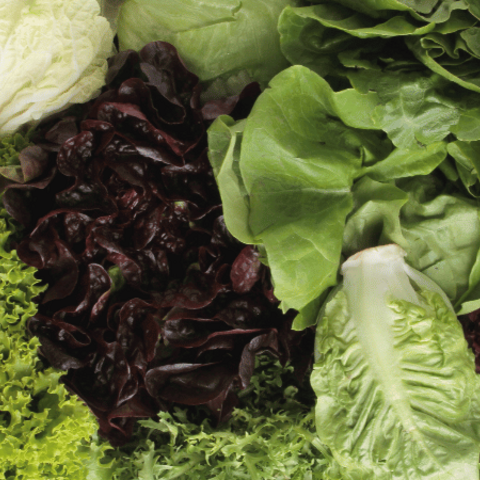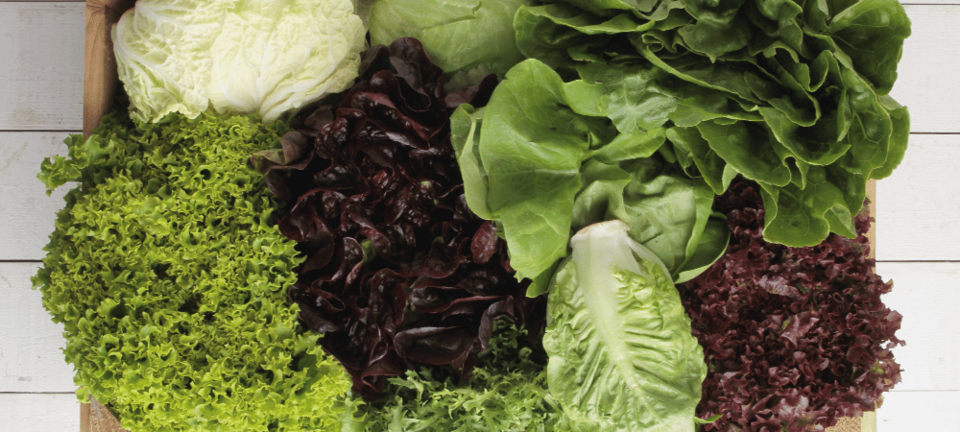
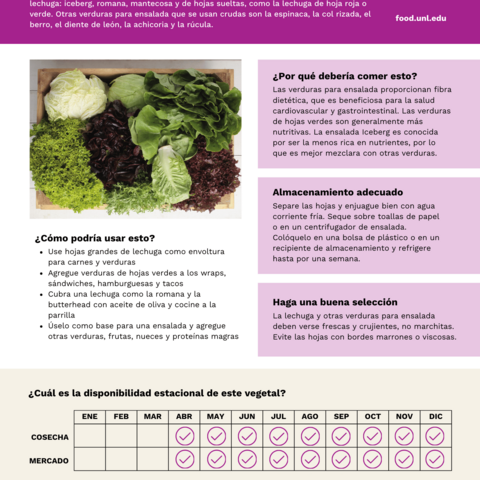
The raw leaves we toss into a salad may come from several varieties of lettuce: iceberg, romaine, butterhead, and loose-leaf, such as red or green leaf lettuce. Other salad greens used raw include spinach, kale, watercress, dandelion, radicchio, and arugula.
Why Should I Eat This?
Salad greens provide dietary fiber, which is beneficial in cardiovascular and gastrointestinal health. Dark leafy greens are generally more nutritious. Iceberg is known for being the least nutrient-dense salad green so it's best to mix it with other greens.
Make a Good Selection
Lettuce and other salad greens should look fresh and crisp, not wilted. Avoid leaves with brown edges or that are slimy.
Proper Storage
Separate the leaves and rinse thoroughly under cool running water. Dry on paper towels or in a salad spinner. Place in a plastic bag or storage container and refrigerate for up to one week.
How Could I Use This?
- Use large lettuce leaves as a wrap for meat and vegetables
- Add leafy greens to wraps, sandwiches, hamburgers, and tacos
- Coat a head lettuce like romaine and butterhead with olive oil and grill
- Use as a base for a salad and add other vegetables, fruits, nuts, and lean proteins
Seasonal Availability in Nebraska
Harvest Season: April through December
Market Availability: April through December
Featured Recipes

Download Handouts
Source:
- Seasonal Produce Guide - Lettuce, SNAP-Ed Connection
- Seasonal Produce Guide - Collard Greens, SNAP-Ed Connection